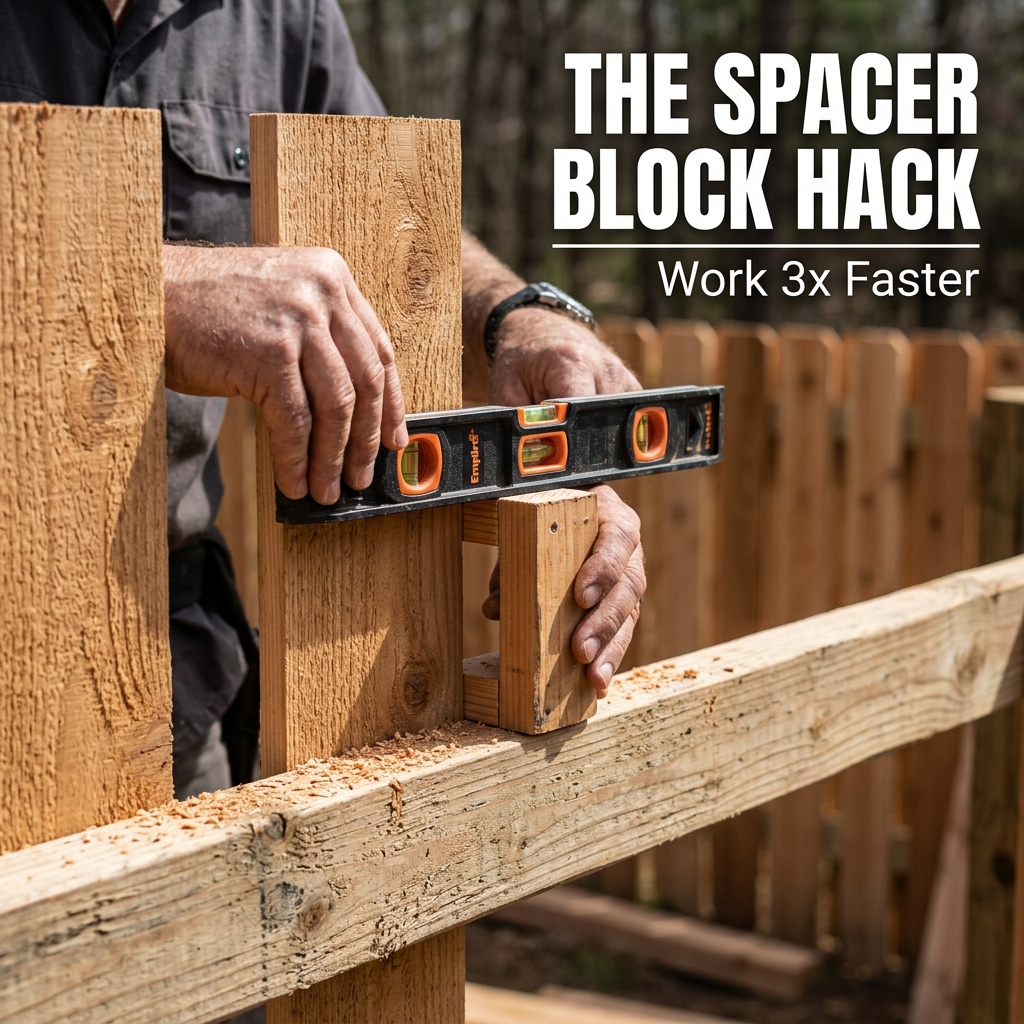
 Calculator Match
Spacing & Alignment★4.8(1,420)
Fence Picket & Deck Spacing Jig
Locks onto top and bottom rails to maintain your exact picket gap (1/4" to 4") without measuring every board.
$19.99$24.99
View on AmazonBerechnen Sie millimetergenau die erforderliche Anzahl an Zaunlatten, den gleichmäßigen Zwischenabstand, das Achsmaß und den Materialbedarf für Holz-, WPC- und Aluzäune.
Gesamt inkl. Verschnitt:19 Stück
2.028"|51.5 mm
5.528"|140.4 mm
Measures physical gaps & spacers directly on screen. Calibrate for true 1:1 scale matching.
Did you spot an error in the calculation, or have a recommendation to make this tool better for carpenters and DIY builders? Describe your idea or issue below and send it directly to our developer team.
See how your picket quantity, exact gap, and pitch were derived.
L = n × w + (n + 1) × gg = (L - n × w) / (n + 1)L = n × w + (n - 1) × gg = (L - n × w) / (n - 1)Walkthrough of a standard 8-foot (96-inch) wood fence panel built with standard 3.5-inch nominal pickets.
For equal end gaps, there are n + 1 gaps.n = (96 - 2) / (3.5 + 2) = 17.09Rounding to nearest whole number yields 17 pickets.
Total picket width = 17 × 3.5" = 59.5".
Remaining gap span = 96" - 59.5" = 36.5".
Divided over 18 gaps: 2.028" (2 1/16").
Avoid costly timber waste and layout mistakes by following professional measurement best practices.
Always measure the distance between the inside faces of your fence posts, not center-to-center. Measure both at the top rail and bottom rail level to check for post plumbness or bowing.
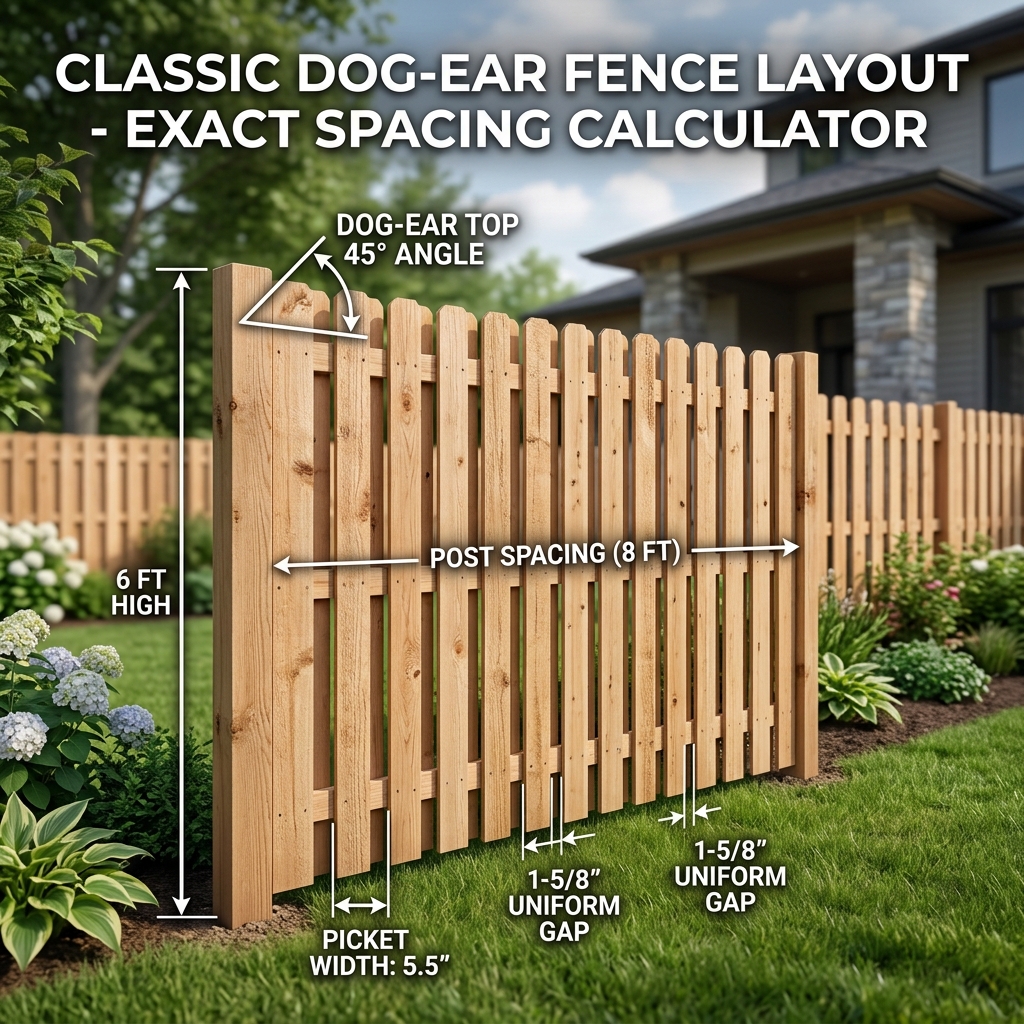
Lumber sizes are nominal. A standard “1x4” wood picket actually measures 3.5 inches wide, and a “1x6” picket measures 5.5 inches wide. Always measure your physical pickets before calculating.
Once the calculator gives your exact gap (e.g. 2 1/16"), cut a small wooden scrap block to that exact width. Use it as a physical spacer between pickets during installation for uniform alignment without measuring every gap.
If building a fence around a swimming pool, IRC safety codes mandate that vertical gaps between pickets must not exceed 4 inches (102 mm) to prevent child passage. Use Mode 2 (Even Spacing with Max Gap) set to 4.0".
Antworten auf häufige Fragen zur Berechnung von Zaunlattenabständen, Normen und Montage.
Man zieht die Gesamtbreite aller Latten (n × w) von der lichten Feldlänge L ab und teilt das Ergebnis durch die Anzahl der Lücken: abstand = (L - n × w) / (n + 1).
Üblich sind Zwischenräume von 30 bis 60 mm bei halbhohen Gartenzäunen. Für Sichtschutz wählt man 10 bis 20 mm, bei Sicherheitszäunen maximal 100 mm.
Berechnen Sie den exakten Abstand mit unserem Rechner und sägen Sie sich ein Holz-Distanzklötzchen (Abstandshalter) mit diesem Maß zu. Legen Sie das Klötzchen bei der Montage zwischen jede Latte.
Teilen Sie die Gesamtlänge des Zaunfelds durch (Lattenbreite + Wunschabstand). Rechnen Sie 5% bis 10% Verschnittreserve für krumme Hölzer hinzu.
Standard-Zaunlatten aus Holz haben meist eine Breite von 70 mm bis 90 mm (gehobelt ca. 89 mm). Messen Sie Ihre gekauften Latten vor der Berechnung nach.
Once your spacing and picket count are calculated, these contractor-tested tools ensure precise alignment, plumb posts, and clean, durable fastening.
Calculator MatchLocks onto top and bottom rails to maintain your exact picket gap (1/4" to 4") without measuring every board.
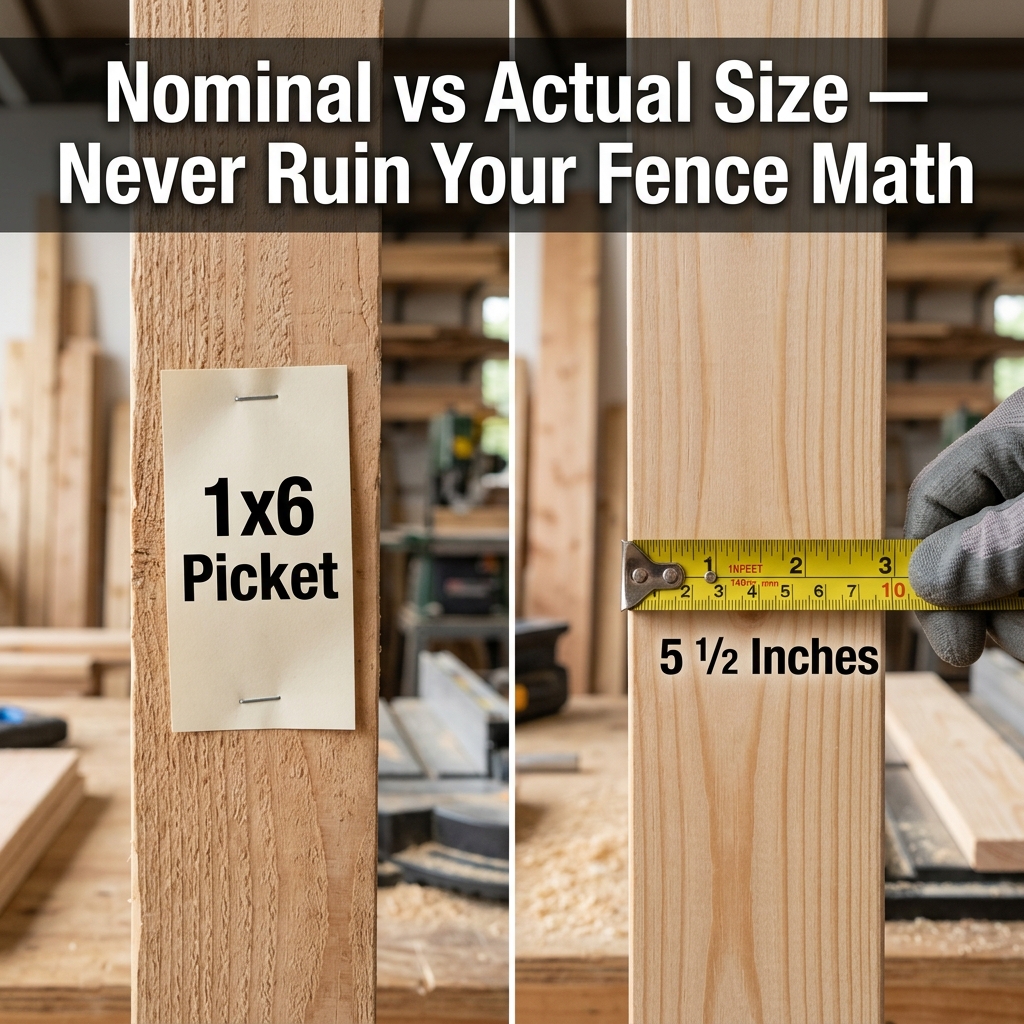 Essential Tool
Hands-free 2-way bubble level with elastic strap. Plumbs fence posts and pickets vertically on both planes at once.
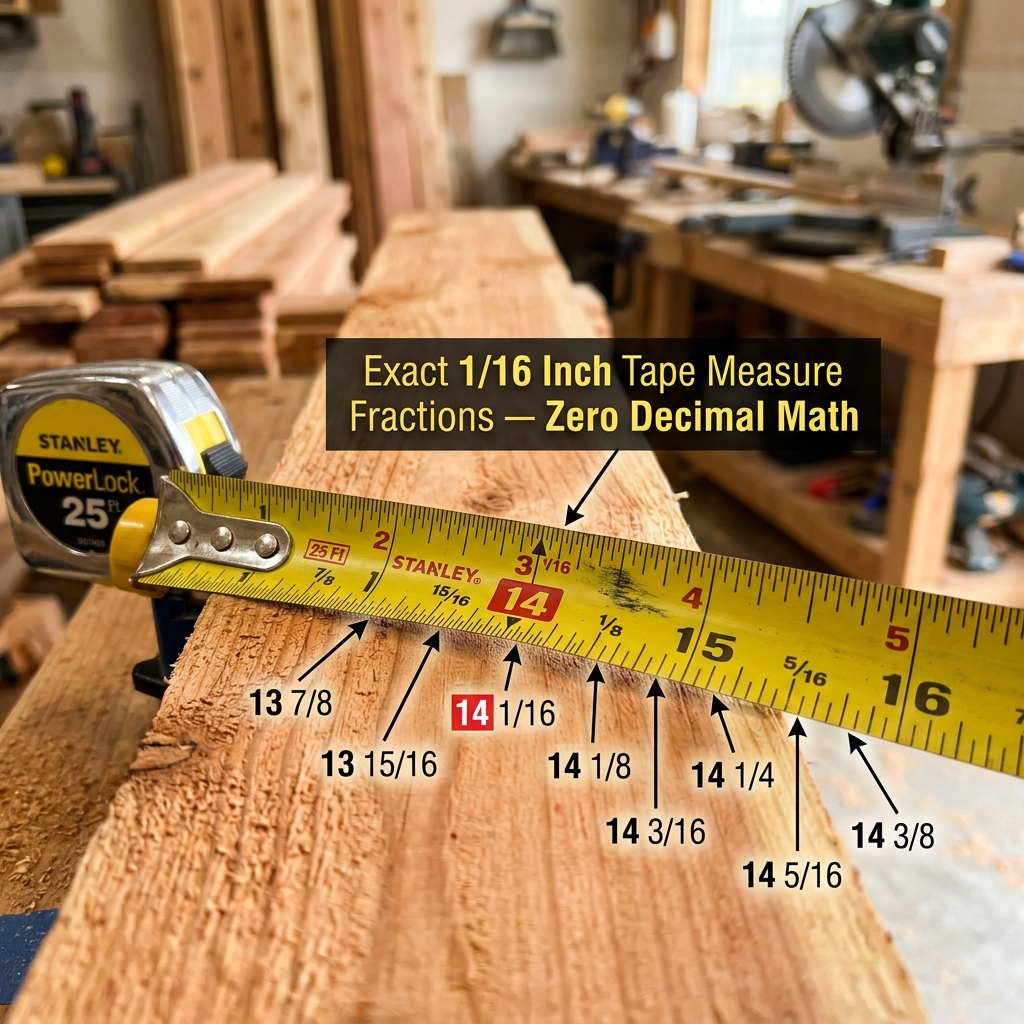 1/16" Readout
Clear fractional markings printed directly down to 1/16", matching the exact decimal and fraction outputs from this calculator.
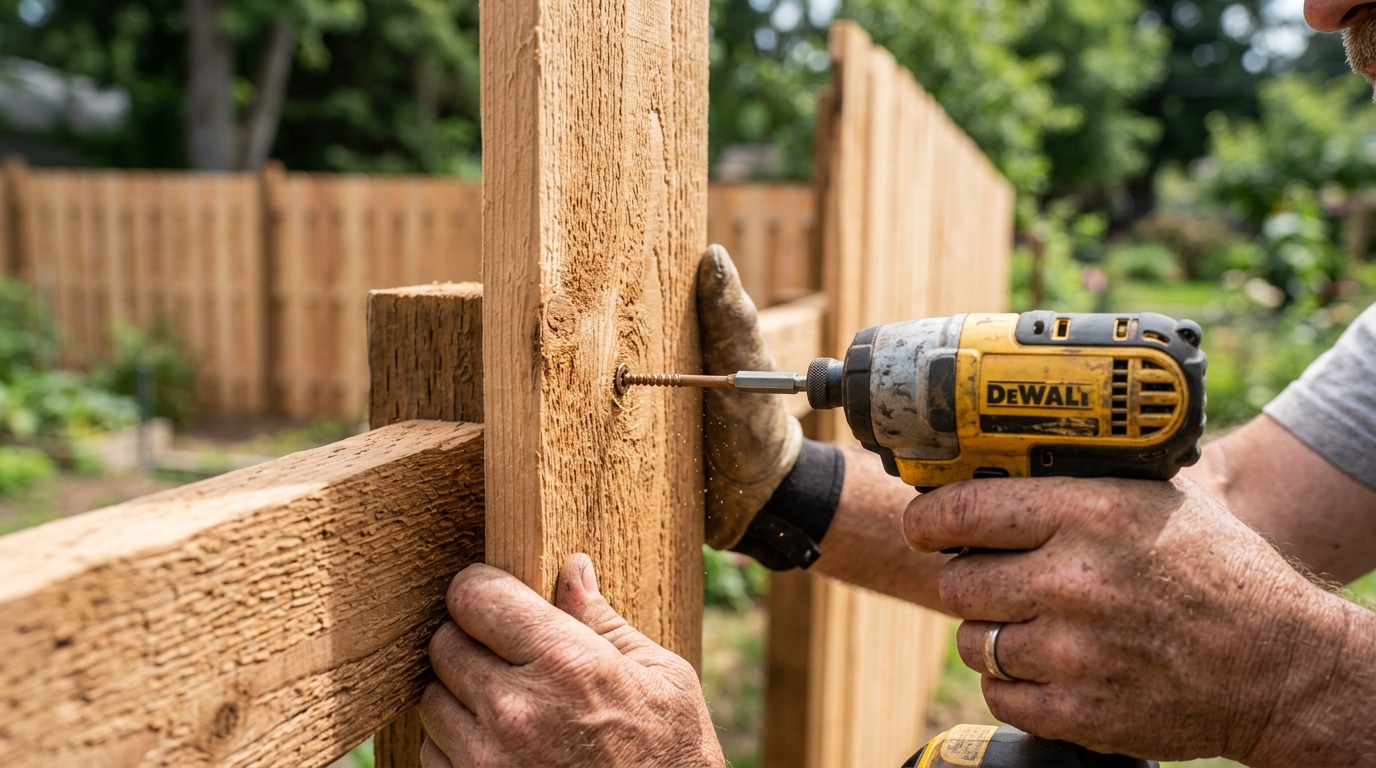 Rust Resistant
ACQ-compatible polymer coating prevents dark black corrosion streaks on cedar and pressure-treated pine fence pickets.
 Contractor Grade
Quickly marks 90° cross-cuts and 45° dog-ear corners. Functions as a reliable circular saw guide for uniform picket tops.
 Weather Defense
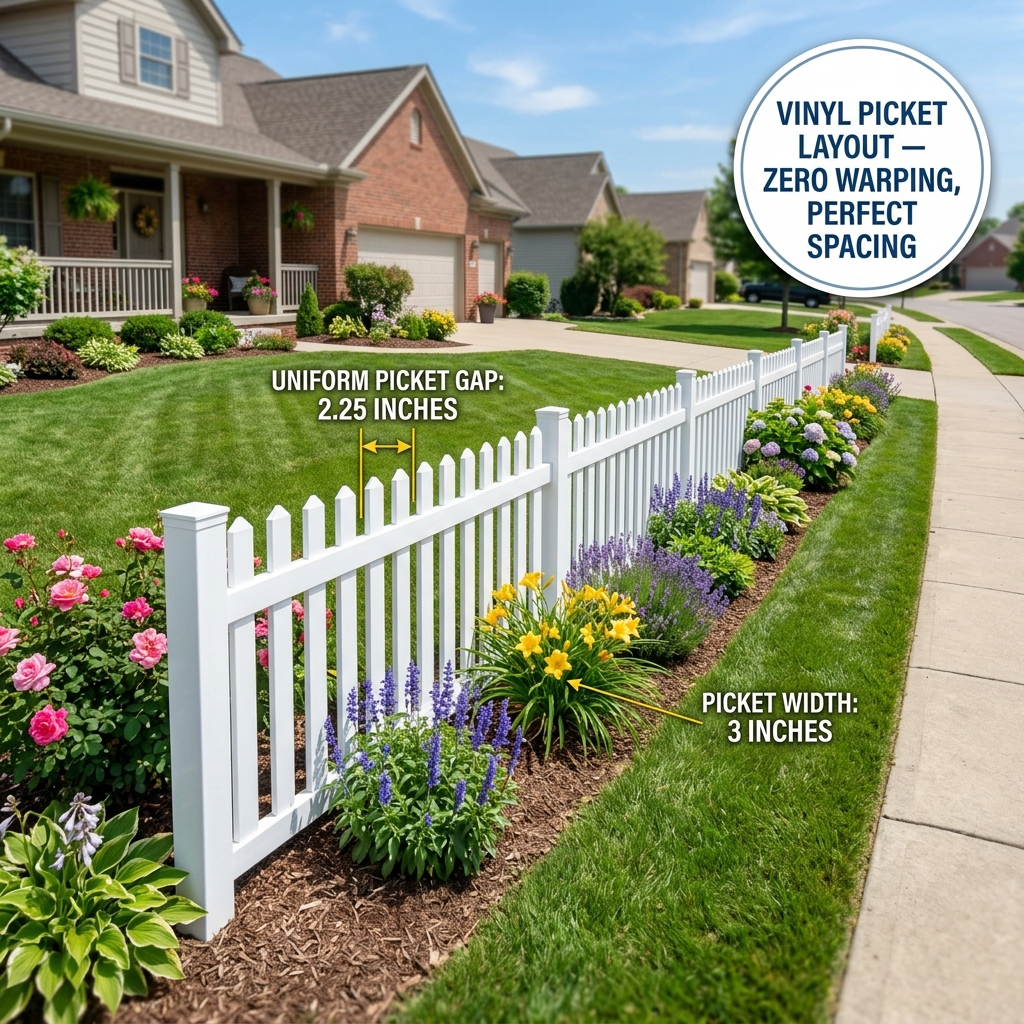
Protects newly installed wood pickets from sun UV graying, rain swelling, warping, and mildew breakdown.