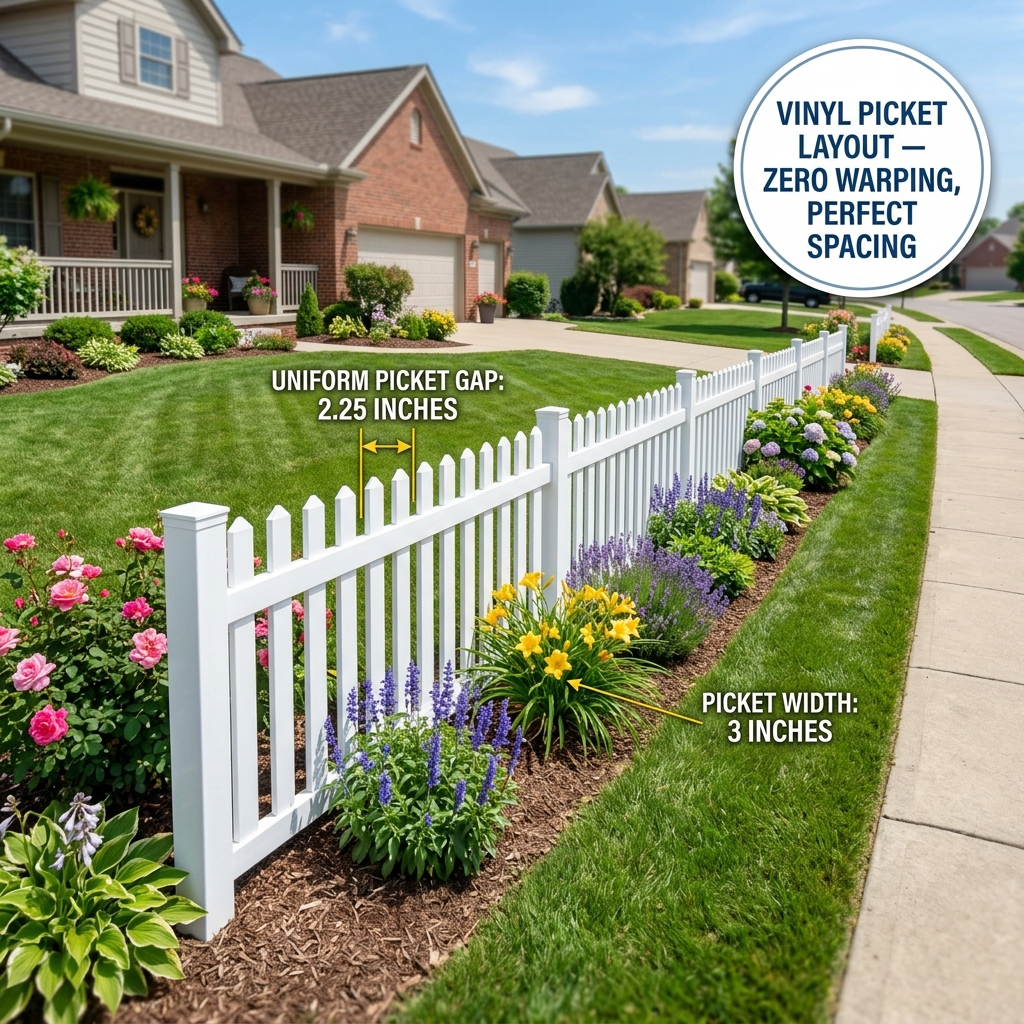
Few architectural features are as instantly recognizable or universally evocative as the picket fence. Long celebrated in literature, suburban folklore, and real estate as the cornerstone of the peaceful suburban homestead, the picket fence remains one of the most practical, aesthetically pleasing, and cost-effective boundary enclosures in residential construction.
Yet for all its charm, many homeowners, aspiring builders, and DIY carpenters ask fundamental questions before breaking ground: What technically defines a picket fence? How does it differ from a standard privacy or shadowbox fence? What are the individual components called, which lumber species performs best, and what spacing rules must you follow to keep pets secure and satisfy local building codes?
In this comprehensive contractor guide, we break down everything you need to know about picket fences—from structural anatomy and popular picket profiles to material comparisons, realistic cost breakdowns, and exact spacing math.
1. What Is a Picket Fence? (Clear Definition)
At its most fundamental engineering level, a picket fence is a low-to-medium-height boundary fence characterized by evenly spaced vertical boards (pickets) attached to two or more horizontal support rails (stringers), which are anchored between sturdy vertical posts.
Unlike a solid privacy fence—which stands 6 to 8 feet tall with tightly fitted tongue-and-groove or edge-to-edge boards designed to block sightlines—a traditional picket fence typically stands 3 to 4 feet tall (36 to 48 inches) and intentionally leaves open gaps between each vertical board.
       TYPICAL PICKET FENCE ELEVATION (OPEN RHYTHM)

  [Post]        [Picket]  [Gap]  [Picket]  [Gap]        [Post]
    ||             |       <->      |       <->           ||
    ||=============|================|=====================|| <-- Top Rail
    ||             |                |                     ||
    ||             |                |                     ||
    ||=============|================|=====================|| <-- Bottom Rail
    ||             |                |                     ||
   ====           ===              ===                   ==== <-- Ground Line (2" clearance)
  |Post|                                                |Post|
  |Foot|                                                |Foot|
The Three Hallmarks of a True Picket Fence:
- Vertical Pickets: Slender, upright wood slats or extruded vinyl/metal rails, often crowned with a decorative pointed, arched, or chamfered top.
- Even Spacing Gaps: Regular, symmetrical openings between each picket (usually between 1.5 inches and 3 inches wide), allowing air, sunlight, and visibility to flow freely.
- Open Demarcation: Designed to establish property boundaries, protect landscaping, and contain children or small pets without boxing in the property or obstructing neighborhood views.
2. Picket Fence vs. Privacy Fence vs. Shadowbox
When deciding on a perimeter layout for your property, understanding how picket fences compare to other common fencing styles is crucial:
| Feature | Classic Picket Fence | Solid Privacy Fence | Shadowbox (Board-on-Board) |
|---|---|---|---|
| Typical Height | 3 to 4 feet (36” – 48”) | 6 to 8 feet (72” – 96”) | 6 feet (72”) |
| Visual Privacy | Low (Open view through gaps) | Complete (100% solid barrier) | Semi-Private (Angled view only) |
| Wind Resistance | Excellent (Air passes freely) | Poor (Acts as a solid sail in storms) | Good (Air circulates through offsets) |
| Primary Purpose | Curb appeal, boundary marking, pet safety | Complete seclusion, sound dampening | Wind protection with two-sided beauty |
| Material Usage | Least lumber per linear foot | High lumber consumption | Highest lumber consumption |
| Neighborhood Feel | Welcoming, open, and friendly | Fortified and isolated | Balanced and structural |
3. Anatomy of a Picket Fence: Key Structural Components
To build, repair, or communicate clearly with a fence contractor, you should know the anatomy of each component that keeps a picket fence plumb, level, and square:
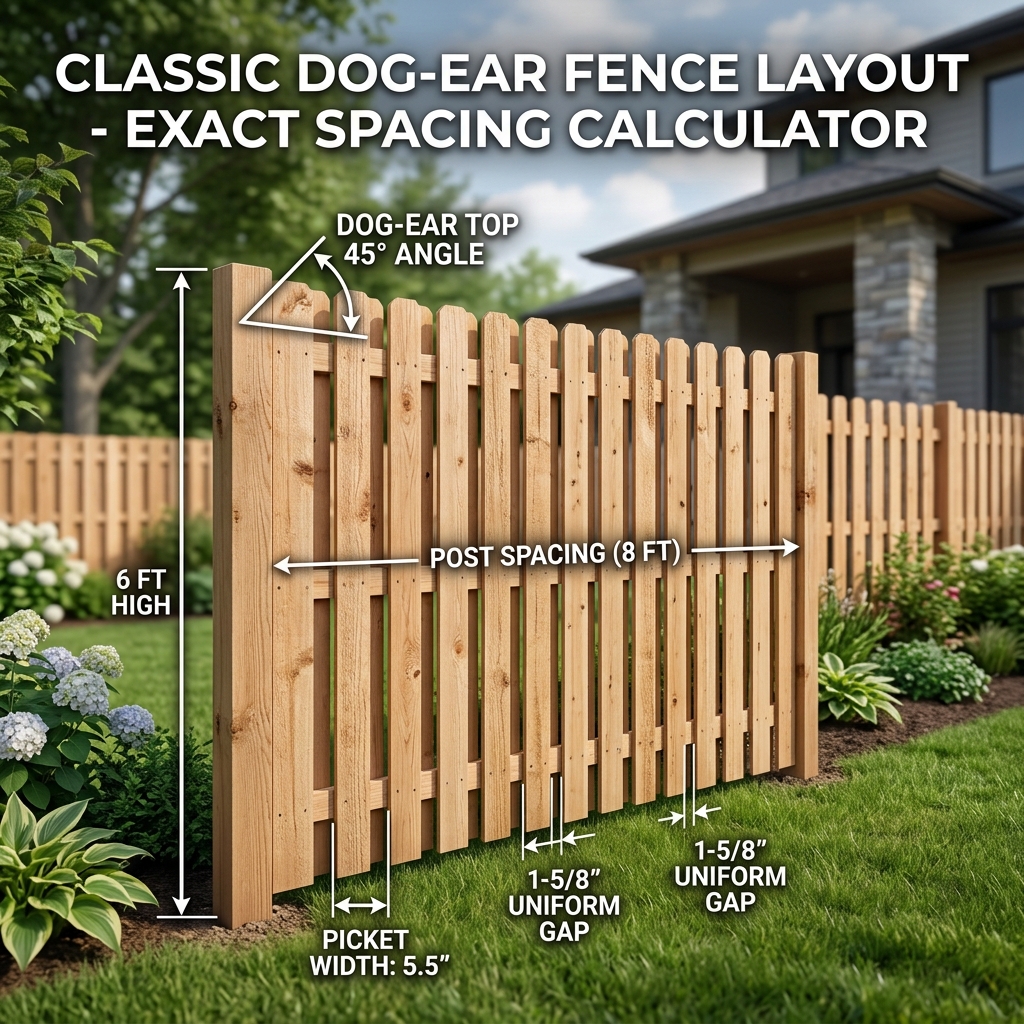
1. The Pickets (Slats or Pales)
The upright boards that define the face of the fence. In North America, the two most common picket sizes are:
- $1 \times 4$ Nominal Lumber: Actual dimensions are $3.5\text{ inches wide} \times 0.75\text{ inches thick}$.
- $1 \times 6$ Nominal Lumber: Actual dimensions are $5.5\text{ inches wide} \times 0.75\text{ inches thick}$.
2. Horizontal Rails (Stringers / Backer Rails)
The horizontal framework running parallel to the ground that supports the pickets. Picket fences up to 4 feet tall use two rails (a top rail approximately 6 to 8 inches below the picket tops, and a bottom rail 6 to 8 inches above the ground). Fences 5 feet or taller require a third center rail to prevent the pickets from bowing over time.
- Most commonly built using dimensional $2 \times 4$ lumber ($1.5\text{ in} \times 3.5\text{ in}$).
3. Fence Posts
The structural backbone of the entire assembly. Heavy vertical timbers or metal posts placed every 6 to 8 feet along the run:
- Standard posts: $4 \times 4$ lumber ($3.5\text{ in} \times 3.5\text{ in}$).
- Gate posts & terminal corner posts: Often upgraded to $6 \times 6$ lumber to support the dynamic swinging weight of gates without sagging.
4. Post Footings & Concrete
Posts must be set into excavated holes typically 24 to 36 inches deep (or at least 6 inches below your regional winter frost line). Surrounding the post with dry-pour or mixed concrete anchored over a 4-inch base layer of crushed gravel ensures structural stability and drainage.
5. Ground Clearance
Pickets must never touch the dirt or turf. A minimum clearance of 2 inches above grade protects the bottom grain of the wood from wicking ground moisture, preventing premature bottom rot and weed-trimmer damage.
6. Exterior-Grade Fasteners
Never use standard drywall or interior screws. Pickets should be fastened to stringers with hot-dip galvanized ring-shank nails or exterior-coated ceramic/stainless steel screws (minimum 1-5/8” to 2” length) to avoid unsightly black bleed marks caused by wood tannins reacting with cheap metals.
4. Popular Picket Top Profiles & Head Styles
The silhouette of a picket fence is largely determined by the profile cut into the top of each picket. While flat-top designs suit contemporary architecture, decorative cuts provide traditional personality:
        COMMON PICKET TOP SILHOUETTES

    /\         /\         +---+        /|         (   )
   /  \       /  \        |   |       / |        (     )
  /    \     (    )       |   |      /  |       (       )
  |    |      \__/        |   |     |   |        |     |
  |    |      |  |        |   |     |   |        |     |
  Sharp       French      Flat      Dog-Ear      Gothic /
  Point       Gothic      Top                    Round
1. Dog-Ear Pickets
The undisputed king of residential fencing. Both top corners are trimmed off at a 45-degree angle.
- Why it’s popular: Eliminates sharp splinters, sheds rain efficiently off the end-grain, and is the most widely stocked and economical pre-cut profile at home improvement centers.
2. French Gothic & Traditional Gothic
An elegant, sculpted design featuring a spear point flanked by graceful curved half-moon cutouts.
- Why it’s popular: Adds instant Victorian, Cape Cod, or historic colonial charm to cottages and suburban front lawns.
3. Sharp Point (Spear / Stockade)
A simple 45-degree triangular point on both sides forming a pyramid peak.
- Historic roots: Originally used in 18th and 19th-century frontier defense fortifications to discourage intruders and wild animals from climbing over.
4. Flat Top
A straight 90-degree square cut across the top of the picket.
- Why it’s popular: Sleek, clean, and minimalist. Often paired with a continuous top cap rail for modern craftsman or Japanese garden fence aesthetics.
5. Scalloped vs. Arched Layouts
Rather than keeping all pickets at uniform height, contractors can cut the tops into sweeping curves:
- Scalloped (Concave): The fence dips gracefully in the center between two posts, rising back up at the post corners.
- Arched (Convex): The center pickets stand tallest, tapering downward toward the flanking posts.
5. Material Comparison: Wood vs. Vinyl vs. Aluminum
While traditional Americana is synonymous with painted white cedar, modern materials provide diverse balances between upfront cost and long-term maintenance:
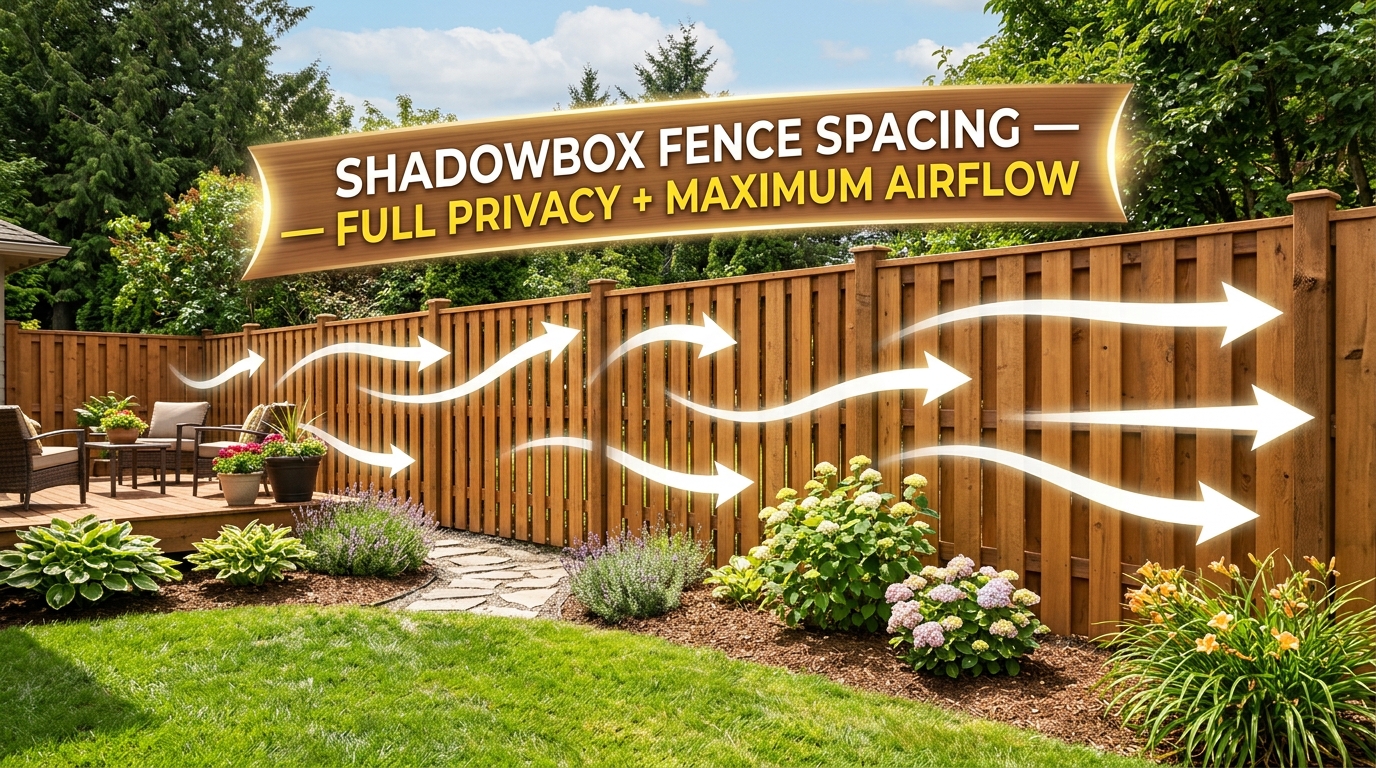
1. Wood (Western Red Cedar, Redwood, Pressure-Treated Pine)
- Aesthetics: Warm, natural, and timeless. Can be stained in warm cedar tones or painted classic high-gloss white.
- Lifespan: 15 to 25 years with diligent maintenance.
- Maintenance Required: High. Requires power washing, mold remediation, and resealing or repainting every 2 to 3 years.
- Cost: $$ (Moderate).
2. Vinyl (PVC)
- Aesthetics: Clean, bright, and uniform. Does not yellow when manufactured with modern UV-inhibitors.
- Lifespan: 30+ years. Virtually impervious to rot, termites, moisture, and blistering paint.
- Maintenance Required: Very low. Simply spray down once a year with soapy water or a garden hose.
- Cost: $$$ (Higher upfront materials cost, but zero maintenance expenses over time).
3. Ornamental Aluminum & Steel
- Aesthetics: Sleek, slender vertical rails that mimic traditional historic wrought iron without the rust.
- Lifespan: 40+ years with powder-coated finishes.
- Maintenance Required: Almost zero.
- Cost: $$$$ (Premium upfront investment, especially for pool perimeter enclosures).
6. How Much Does a Picket Fence Cost to Build?
Fence pricing is calculated per linear foot (LF). Total expenditures depend on whether you tackle the project as a DIY weekend warrior or hire a professional fence crew:
    ESTIMATED COST PER 100 LINEAR FEET (4-FOOT PICKET FENCE)

  Pressure-Treated Wood (DIY)    : $1,200 – $1,800
  Western Red Cedar (DIY)        : $1,800 – $2,800
  Vinyl / PVC Pickets (DIY)      : $2,200 – $3,400
  Professional Turnkey Install   : $3,200 – $6,500
Cost Breakdown Per Linear Foot (Installed vs DIY):
- Pressure-Treated Wood: $12 to $18/LF (DIY materials) | $25 to $40/LF (Installed)
- Western Red Cedar: $18 to $28/LF (DIY materials) | $35 to $55/LF (Installed)
- Vinyl / PVC: $22 to $34/LF (DIY materials) | $40 to $65/LF (Installed)
- Ornamental Aluminum: $28 to $45/LF (DIY materials) | $50 to $85/LF (Installed)
7. Crucial Spacing Rules & Building Codes
The visual beauty and legal compliance of any picket fence hinges on picket spacing. Installing gaps that are too wide or too narrow leads to safety violations, pet escapes, or an awkward visual rhythm.
The 4-Inch Safety Sphere Rule (IRC & Swimming Pool Codes)
In most municipal residential building codes (such as the International Residential Code and BOCA pool standards):
- The maximum permissible gap between pickets on swimming pool safety barriers and elevated deck railings is strictly less than 4 inches (102 mm).
- The test: A solid 4-inch sphere (simulating the head of a small toddler) must not be able to pass through the opening between any two adjacent pickets.
Pet & Small Dog Spacing
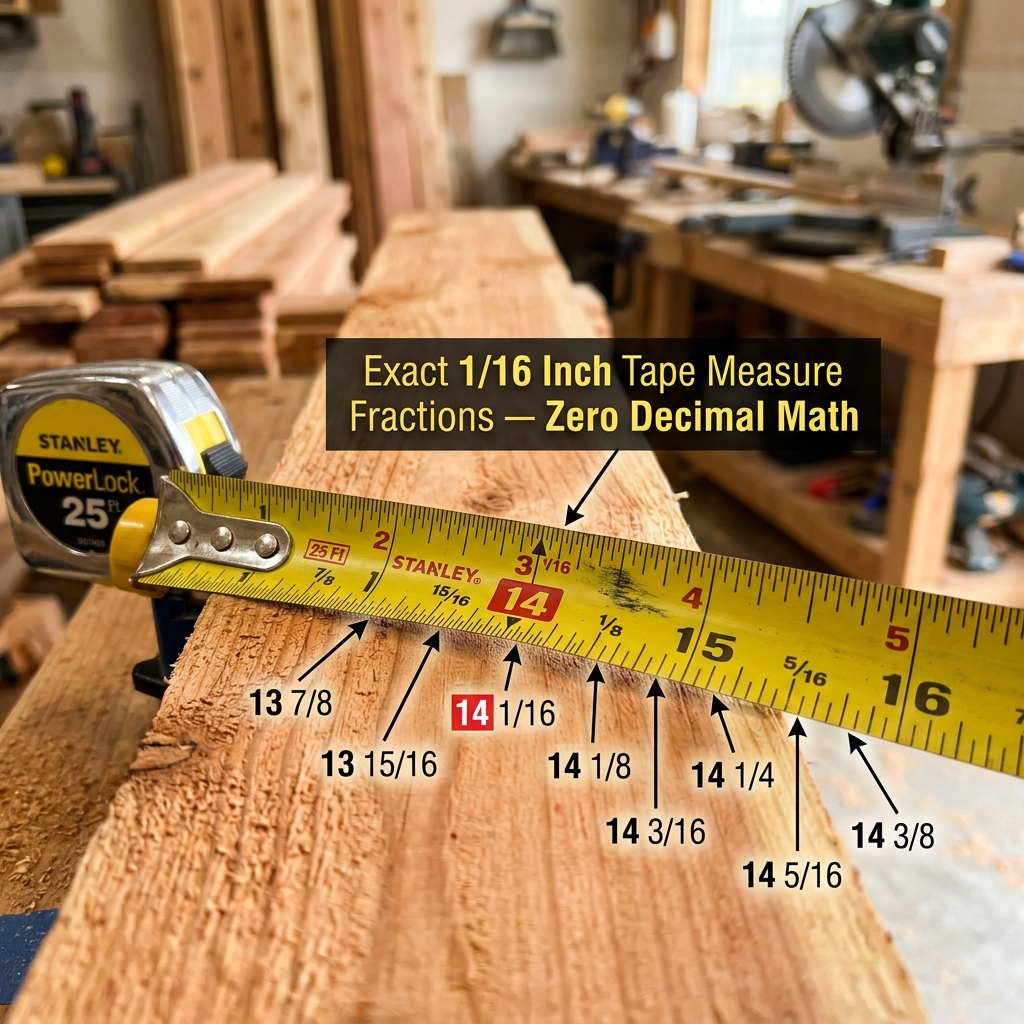
If you are enclosing a front yard for small dogs (such as Dachshunds, French Bulldogs, or Terriers), a 3.5-inch or 4-inch gap is large enough for adventurous pets to wedge their heads through or squeeze their bodies outside. For secure pet containment, contractors recommend spacing pickets between 1.5 inches and 2.25 inches apart.
The Mathematical Spacing Formula
To ensure every gap across an 8-foot (96-inch) fence panel is identical from post to post, use the equal gap formula:
$$\text{Exact Gap } (g) = \frac{L - (N \times w)}{N + 1}$$
Where:
- $L$ = Clear span distance between post faces (e.g., $96\text{ inches}$)
- $w$ = Actual measured width of each picket (e.g., $3.5\text{ inches}$)
- $N$ = Chosen whole number of pickets
[!TIP] Don’t do manual fraction math by hand on the job site! Use our free interactive Fence Picket Spacing Calculator to instantly compute your exact picket count, fractional gap width, center-to-center pitch, and lumber waste allowance for any panel width.
8. Five Essential Maintenance Tips for Long Life
- Maintain 2 Inches of Ground Clearance: Never bury wood pickets in mulch, soil, or grass. Wet organic matter accelerates rot from the base up within 3 to 5 years.
- Seal Before the Rainy Season: Test your wooden pickets by splashing water droplets against the face. If the water beads and rolls off, your seal is solid. If the wood immediately darkens and absorbs the water, apply an exterior penetrating oil stain or water sealant.
- Trim Nearby Vegetation: Overgrown climbing vines, ivy, and heavy shrubs trap dew and moisture against pickets, shielding them from drying sunlight and encouraging black mold growth.
- Inspect Metal Gate Hinges Semi-Annually: Lubricate latch mechanisms with silicone spray and tighten gate hinge lag bolts to prevent the gate post from leaning under tension.
- Use Stainless Steel or Coated Fasteners: Cheap steel nails oxidize in cedar and treated lumber, leaving ugly black rust tears beneath every nail head.
9. Frequently Asked Questions (FAQ)
Why is it called a “picket” fence?
The term originates from the French word piquet, meaning a pointed wooden stake driven into the ground. Historically, military regiments used sharpened pickets to construct defensive stakes and secure encampments. In the 19th century, American homeowners adopted slender, decorative versions of these pointed stakes to enclose front gardens, giving birth to the modern “picket fence.”
How tall should a front yard picket fence be?
Most municipal zoning laws and Homeowners Associations (HOAs) restrict front yard fence heights to 36 to 42 inches (3 to 3.5 feet). This ensures clear sightlines for drivers backing out of driveways and keeps neighborhoods looking open and friendly. Backyard boundary fences can often be built up to 6 feet tall.
What is the best wood for a long-lasting picket fence?
Western Red Cedar is widely regarded as the gold standard for wood picket fences. Cedar contains natural oils and tannins that resist rot, decay, and insect attacks without requiring chemical pressure treatment. It also exhibits minimal warping and twisting compared to standard southern yellow pine.
Do picket fences increase property value?
Yes. A well-built, well-maintained picket fence enhances curb appeal, clearly delineates property boundaries, and provides peace of mind for families with pets or young children—making the property significantly more attractive to prospective homebuyers.
Ready to Plan Your Picket Fence?
Whether you’re building a classic 8-foot wood panel, a dog-ear privacy screen, or a pet-safe front yard border, getting your picket counts and spacing right from day one is the difference between an amateur job and master carpentry.
- For the full step-by-step construction tutorial, follow our guide on How to Build a Picket Fence: Step-by-Step DIY Installation.
- Head over to our Free Fence Picket Spacing Calculator to calculate your exact spacing, generate real-time visual diagrams, and print your step-by-step contractor summary sheet in seconds!